
Building a High-Performance Blog with Next.js and Markdown

 IT-RAYS
- 22/07/2025
- Comments: 0
- Categories:
In today's digital landscape, a blog is an essential tool for any business. It establishes authority, drives organic traffic, and provides a platform to connect with your audience. While many options exist for creating a blog, building a custom solution with Next.js and Markdown offers a powerful combination of speed, flexibility, and maintainability.
At [Your Company Name], this is our go-to solution for creating high-performance, developer-friendly blogs. Here’s why this approach is so effective.
Why Next.js is the Perfect Foundation
Next.js is a React framework that excels at performance. It offers a suite of features that are perfect for building a static or dynamic blog.
- Static Site Generation (SSG): For a blog, this is the killer feature. With SSG, your blog posts are pre-rendered into static HTML files at build time. When a user requests a page, it's served instantly from a global CDN, resulting in lightning-fast load times. There's no server-side rendering on the fly, and no client-side JavaScript bundle to load, making the experience incredibly fast.
- Built-in Routing: Next.js simplifies routing. A new file in the
pagesorappdirectory automatically becomes a new route, making it easy to create new blog posts. - Image Optimization: Next.js includes a built-in
Imagecomponent that automatically optimizes images, serving them in the correct format and size to different devices. This is crucial for blogs, which are often image-heavy.
The Simplicity and Power of Markdown
Markdown is a lightweight markup language with a plain text syntax. It's incredibly easy to write and read, and it's the perfect format for writing blog post content.
- Ease of Use: You don't need a clunky CMS editor to write in Markdown. You can use any text editor, and the syntax is intuitive. Headings, bold text, links, and lists are all just a few keystrokes away.
- Future-Proof Content: Your content is just a
.mdfile. It's portable, version-controlled, and not locked into a proprietary database or CMS. You can easily migrate your content to another platform if needed.
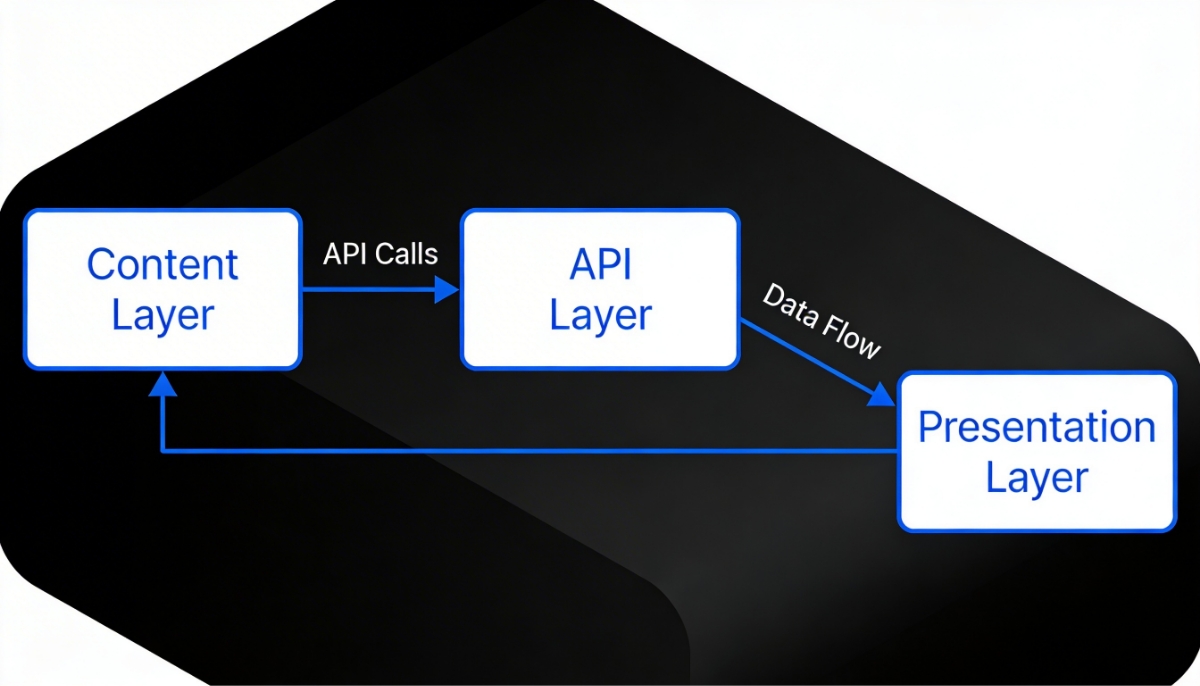
How It All Comes Together: A Step-by-Step Overview
- Content Management: Your blog posts are simply Markdown files stored in a directory (e.g.,
/posts). Each file contains the post content and "frontmatter" at the top—metadata like the title, author, and publish date. - Dynamic Routing: We use Next.js's dynamic routing to create a template for blog posts. For example, a file named
[slug].jsin thepostsdirectory would handle all your blog posts. - Parsing Markdown: At build time, Next.js uses a library (like
gray-matterto parse the frontmatter andremarkormarkdown-itto convert the Markdown content into HTML. - Static Generation: Next.js's
getStaticPropsandgetStaticPathsfunctions read the Markdown files, fetch the data, and generate a static HTML page for each blog post. - Deployment: The final static files are deployed to a service like Vercel or Netlify, which serve them instantly from a global network.
The Result: A Blog That's Fast, Scalable, and a Pleasure to Maintain
By combining Next.js with Markdown, we can deliver a blog that is:
- Blazing Fast: Instant page loads and exceptional performance ratings on tools like Google PageSpeed Insights.
- Secure: Since the site is static, there are no databases or server-side vulnerabilities to worry about.
- Easy to Maintain: Adding a new post is as simple as creating a new Markdown file and pushing it to a Git repository.
- SEO-Friendly: The static HTML is easily crawlable by search engines, ensuring your content ranks well.
If you’re looking to build a blog that not only looks great but also performs exceptionally, the Next.js and Markdown approach is the gold standard. We're experts in building these types of solutions, and we'd be happy to help you get started.




Leave a Comment
No comments yet
Be the first to share your thoughts on this post